
Driveways Built for Decades of Use
Concrete Driveways in Berea for new construction homes and residential properties requiring long-term freeze-thaw durability
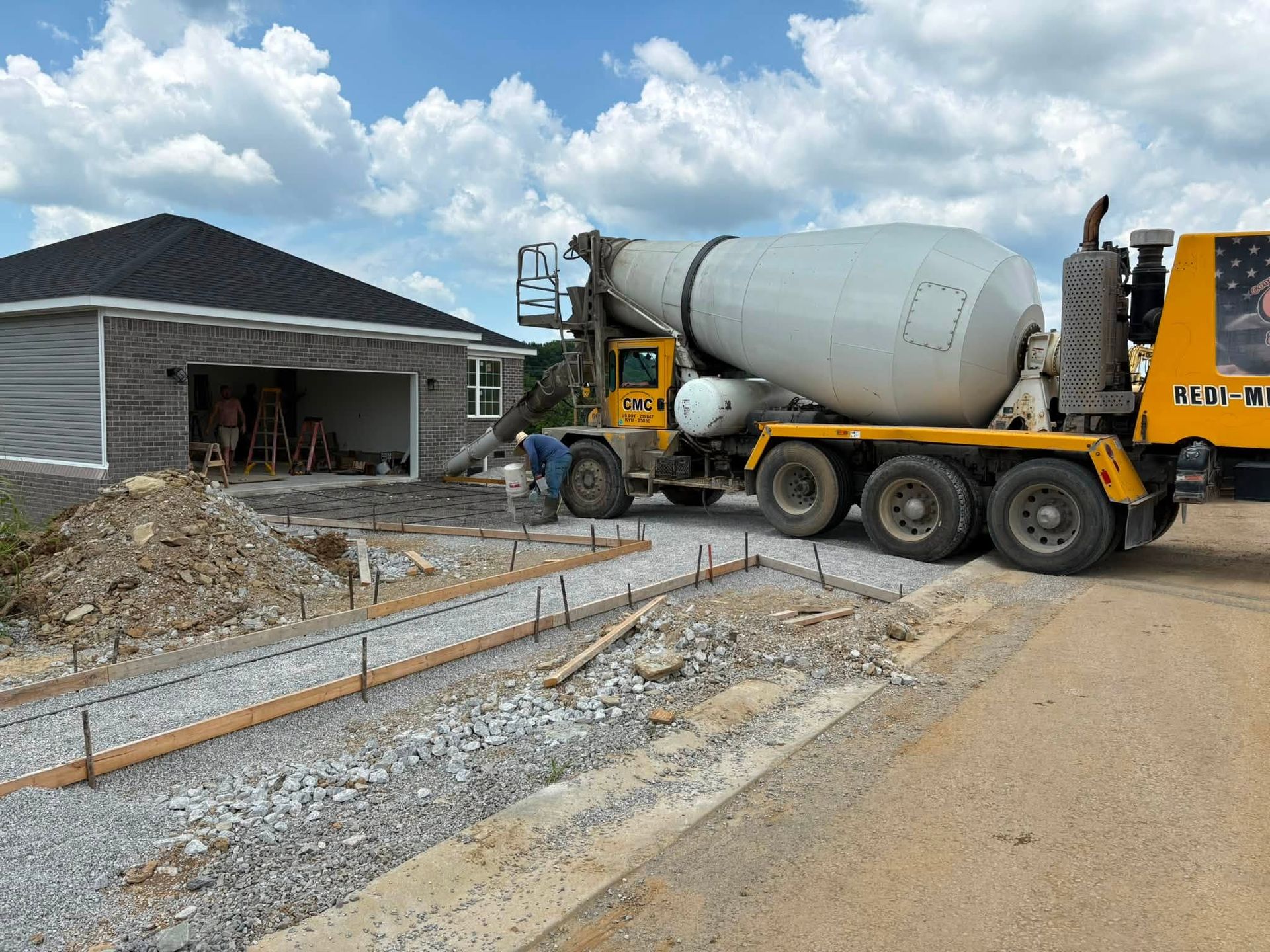
Fugate's Concrete installs residential concrete driveways throughout Berea and Madison County, with work concentrated in new subdivisions where proper base preparation determines whether a driveway lasts five years or fifty. The freeze-thaw cycles and seasonal moisture common across the 606 region mean that shortcuts in base compaction or drainage setup show up as cracking within the first two winters. Over 240 residential driveways have been poured through direct builder relationships, where foundation work, footer drainage, and driveway installation coordinate on the same timeline to prevent water issues before the homeowner moves in.
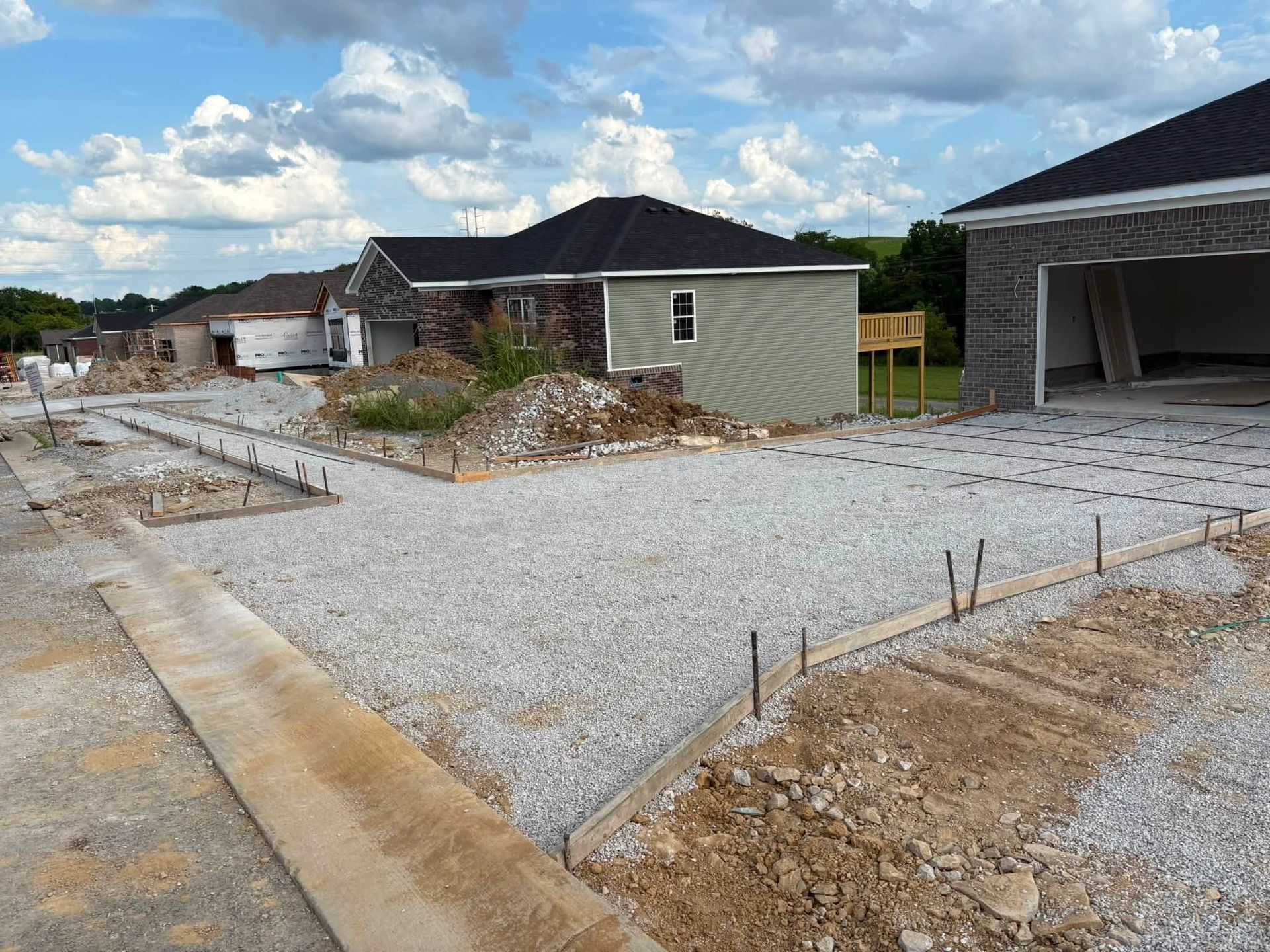
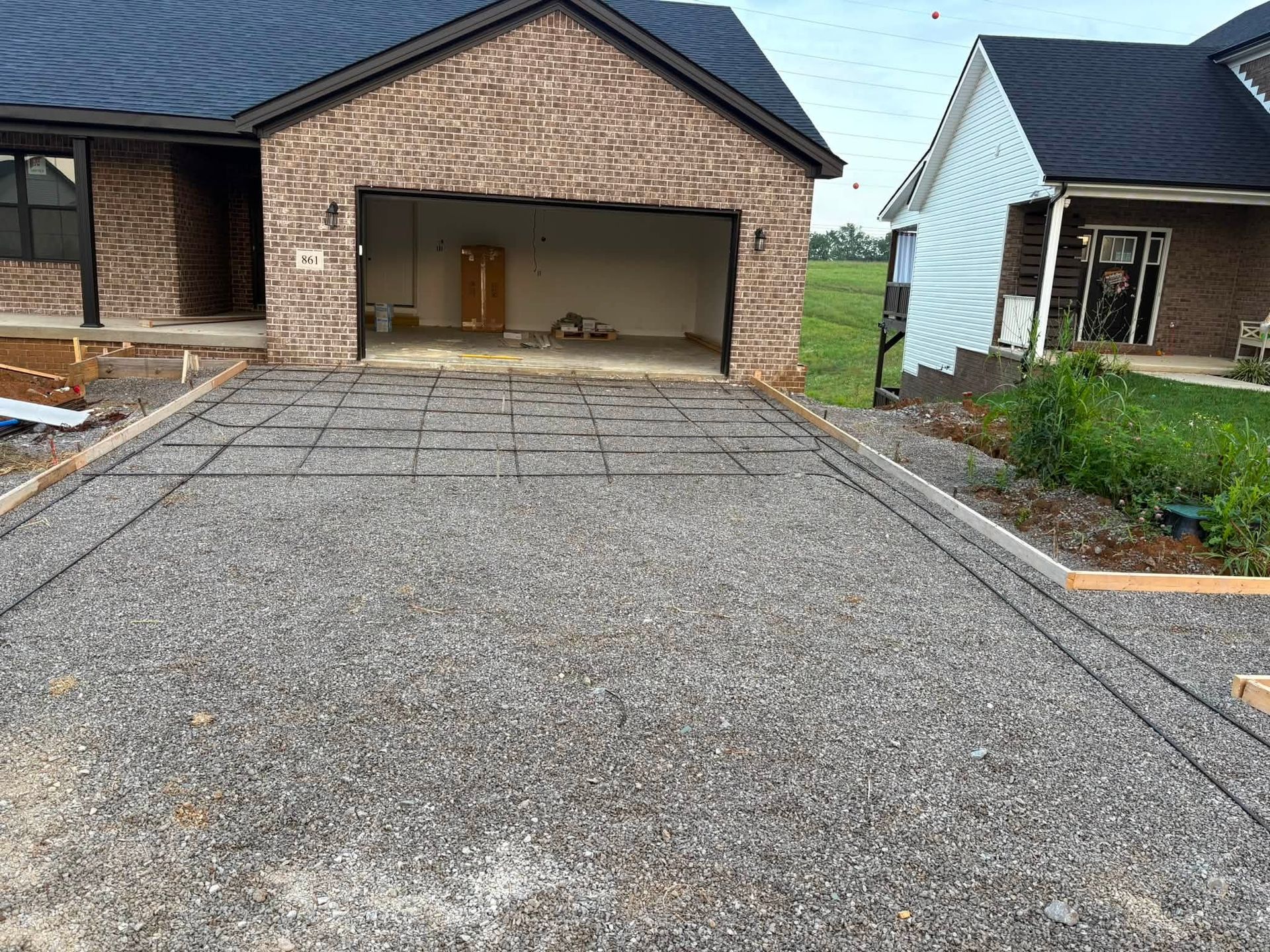
Full-depth driveway installation starts with excavation to stable soil, followed by a compacted gravel base that prevents settling and provides drainage pathways that move water away from the concrete surface. The concrete pour itself is finished to proper slope specifications so that spring rains and snowmelt move off the surface instead of pooling near the garage threshold. When existing driveways fail due to inadequate base prep or cracking from moisture penetration, tear-out and replacement work addresses the underlying cause rather than resurfacing over a compromised foundation.
Schedule a property evaluation to confirm base requirements and drainage coordination for your new driveway installation..
The difference between a driveway that cracks within three years and one that remains stable for decades comes down to what happens before the concrete truck arrives. A compacted base distributes vehicle weight evenly and provides drainage channels that prevent water from collecting beneath the slab, where freeze-thaw expansion creates the pressure that splits concrete from underneath. Footer coordination ensures that driveway edges tie into foundation drainage systems, so water flowing off rooflines does not saturate the driveway perimeter.
Once the concrete cures and the surface is finished, you see a driveway that sheds water toward the street, supports vehicle weight without settling, and resists the seasonal expansion-contraction cycles that crack poorly prepared slabs. The surface remains level where it meets the garage floor, and no standing water collects near the foundation after heavy rain. Fugate's Concrete coordinates driveway installation with builder schedules on new home projects, so that excavation, base prep, and concrete placement happen in sequence with site grading and drainage work.
Builder relationships allow direct coordination between foundation pours, footer drainage installation, and driveway base preparation, which prevents the scheduling gaps that lead to water pooling in excavated areas or base material contamination from site runoff. Quality control remains consistent because the same crew handles the entire concrete scope, from footer work through final driveway finishing..
What Homeowners Ask Before Installation
New construction projects and driveway replacements in Berea raise similar questions about base preparation, drainage coordination, and how local freeze-thaw cycles affect installation timing and finishing techniques.
What happens during a full-depth driveway installation?
Excavation removes unsuitable soil down to stable ground, a compacted gravel base is installed to specification, and the concrete is poured with proper slope and finishing to shed water and resist cracking from freeze-thaw cycles common in Madison County.
How does freeze-thaw damage affect driveways in the 606 region?
Water that penetrates beneath the slab expands when it freezes, creating upward pressure that cracks concrete; proper base compaction and drainage prevent moisture from collecting under the surface where freeze-thaw cycles occur.
When should I schedule driveway work for new construction?
Coordination with foundation and footer drainage work prevents scheduling conflicts and ensures that base preparation happens on dry, stable ground rather than over saturated excavation areas.
What causes driveways to crack near the garage threshold?
Settlement from inadequate base compaction or water pooling near the foundation edge creates uneven support; proper slope and drainage design move water away from the foundation before it saturates the base material.
Why does tear-out matter for failed driveways?
Resurfacing over a compromised base only postpones the same cracking pattern; full removal allows inspection of the base layer and correction of drainage issues that caused the original failure.
Fugate's Concrete works directly with builders on new home projects throughout Richmond, Berea, and Lancaster, with thirteen years of experience handling the coordination between foundation work and driveway installation. Request a consultation to review base preparation requirements and drainage integration for your property.