
Walkways Built for Long-Term Stability
Concrete Sidewalks in Berea for new residential construction and property upgrades requiring proper grade and freeze-thaw resistance
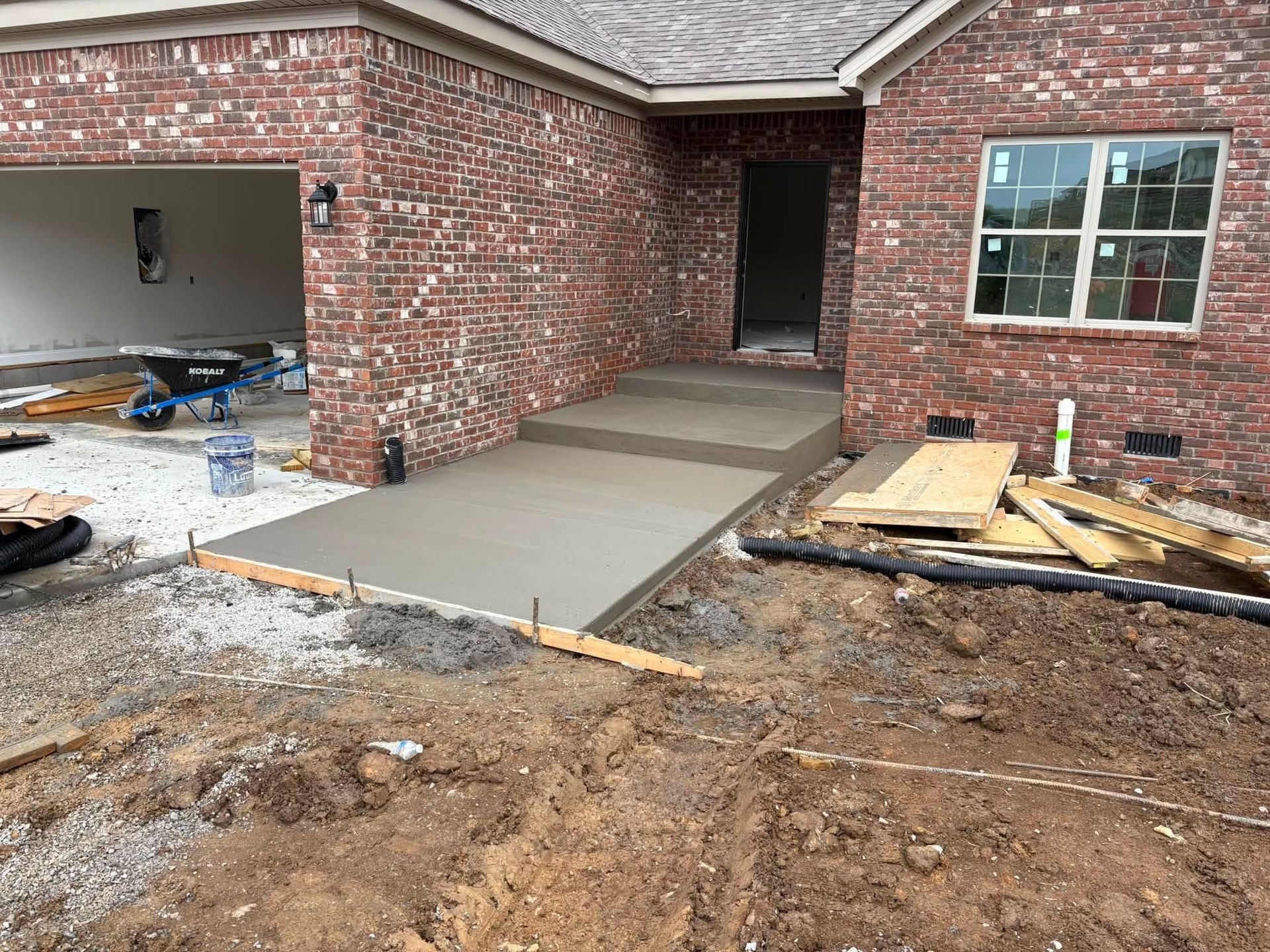
Sidewalk installation on new construction sites coordinates with foundation drainage, driveway placement, and site grading to ensure that water flows away from walkways instead of pooling along edges where freeze-thaw damage concentrates. Fugate's Concrete pours and finishes concrete sidewalks for residential developments and property upgrades throughout Berea, Richmond, and McKee, with base preparation techniques that prevent the settling and cracking common when sidewalks are installed over inadequately compacted soil. The 606 region's weather patterns—spring rains, winter freeze-thaw cycles, and clay-heavy soils—require attention to both base stability and surface finishing to produce walkways that remain level and crack-free for decades.
Proper grade and slope determine whether a sidewalk sheds water or collects it in low spots where standing moisture accelerates surface deterioration. Concrete finishing produces a smooth surface that meets ADA standards for residential walkways while maintaining enough texture to prevent slipping during wet conditions. Integrated site work coordinates sidewalk placement with footer drainage systems and driveway edges, so that water moving off rooflines or driveways does not erode the sidewalk base or saturate the soil beneath the concrete.
Schedule a property evaluation to confirm grade requirements and base preparation for your sidewalk installation.
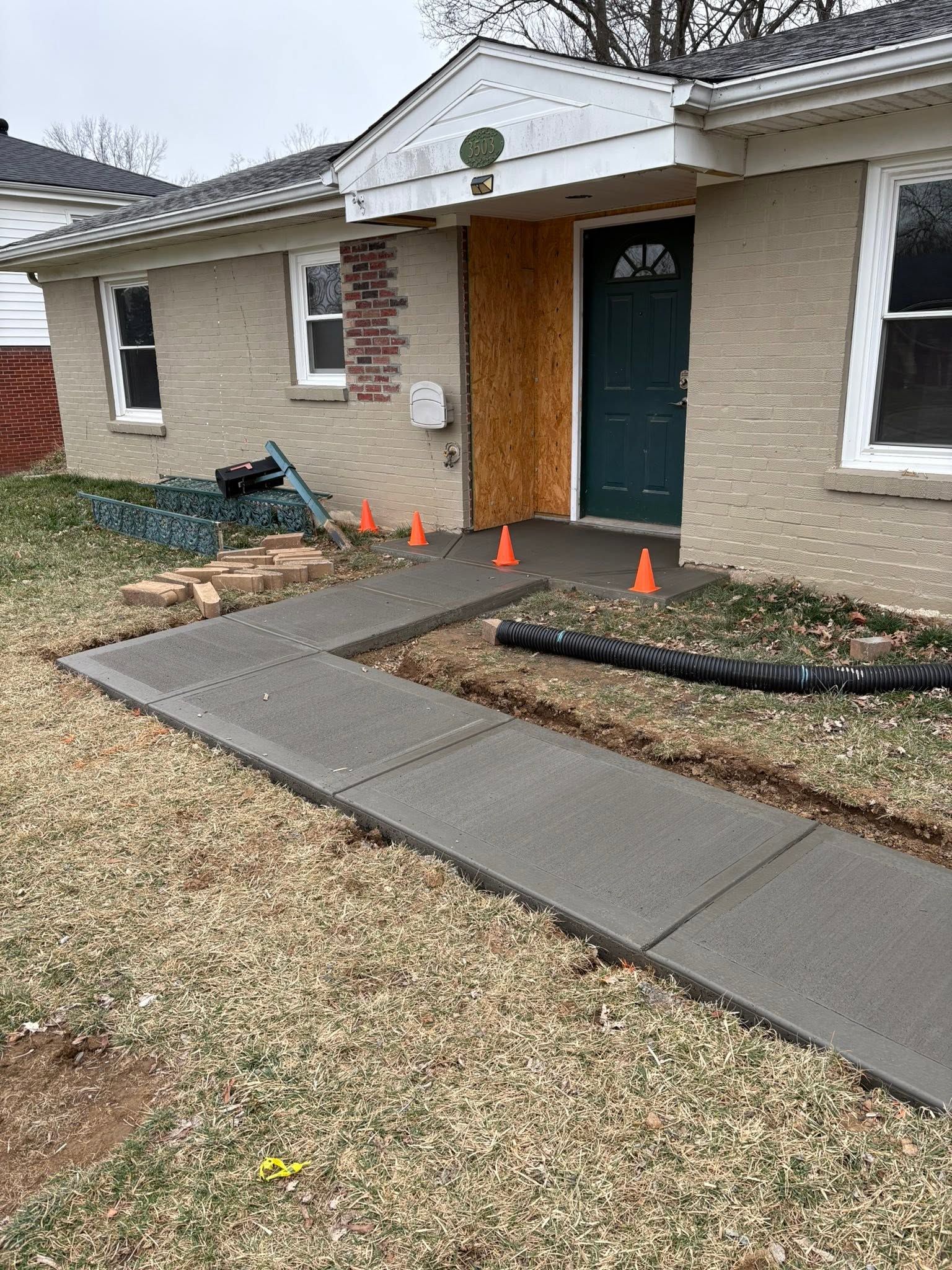
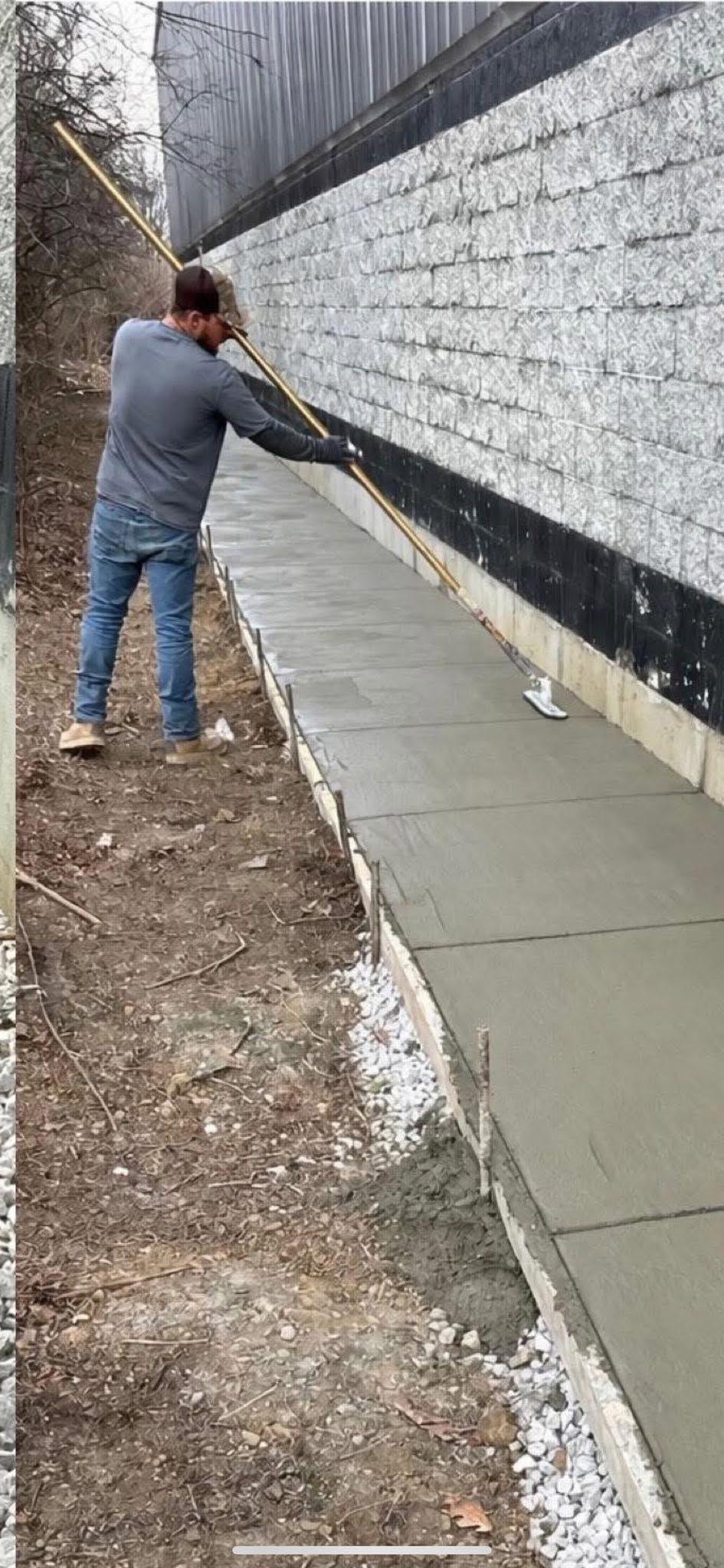
Sidewalk installation begins with excavation to stable soil depth, followed by placement of a compacted gravel base that distributes weight evenly and provides drainage channels that prevent water from collecting beneath the slab. The concrete is poured to consistent thickness and finished with a smooth surface that resists scaling and spalling from freeze-thaw cycles. Edge forms ensure clean lines where the sidewalk meets landscaping or driveway transitions, and control joints are placed to manage the expansion and contraction that occur with seasonal temperature swings.
After the concrete cures, you see a walkway that remains level where it meets steps or driveway aprons, with no standing water collecting in low spots and no trip hazards from uneven settling. The surface handles foot traffic without cracking at control joints, and the edges remain stable where they border landscaping beds or lawn areas. Sidewalks installed as part of new construction projects benefit from coordination with other site concrete work, allowing the same crew to manage footer drainage, driveway placement, and sidewalk installation in sequence.
Owner-operated quality control ensures that finishing work meets standards for smoothness, slope, and edge detail, with attention to the transitions between sidewalk sections and the connections to steps, patios, or driveway aprons. New subdivision work in Richmond, Berea, and Lancaster often includes sidewalk installation as part of the full concrete scope, where builder relationships allow scheduling coordination that prevents delays and ensures consistent quality across all site concrete work.
What Property Owners Usually Ask
Residential construction and property upgrade projects in Berea and surrounding Madison County communities raise questions about base preparation, slope requirements, and how sidewalks integrate with broader site drainage systems.
What base preparation is required for sidewalk installation?
Excavation to stable soil depth, placement of compacted gravel base material, and proper grading ensure that the sidewalk supports foot traffic without settling and that water drains away from the surface rather than pooling beneath the slab.
How do freeze-thaw cycles affect sidewalks in the 606 region?
Water that penetrates surface cracks or collects beneath the slab expands when frozen, creating pressure that lifts and cracks the concrete; proper base compaction and control joint placement manage expansion forces and prevent damage.
When should sidewalk work be scheduled on new construction sites?
Coordination with foundation pours, footer drainage installation, and driveway placement prevents scheduling conflicts and ensures that base preparation happens on stable, properly graded ground.
What causes sidewalks to develop trip hazards from uneven settling?
Inadequate base compaction or installation over unsuitable soil allows sections to sink at different rates, creating height differences between adjacent slabs that become trip hazards.
Why does slope matter for sidewalk durability in Berea?
Proper slope moves water off the surface and away from the foundation, preventing moisture from saturating the base material and causing freeze-thaw damage or erosion that undermines sidewalk stability.
Fugate's Concrete handles sidewalk installation as part of new home construction and residential site work throughout Madison, Rockcastle, and Jessamine counties, with thirteen years of experience coordinating concrete placement with builder schedules and site drainage requirements. Request a consultation to review grade conditions and integration with your property's drainage design.